The Brand Decision Every Business Buyer Needs to Get Right
Let’s cut straight to it.
You just bought a business — or you’re about to. You’ve done the due diligence on the financials, the equipment, the lease. But there’s one decision that most buyers treat like an afterthought that can quietly make or break everything you just paid for:
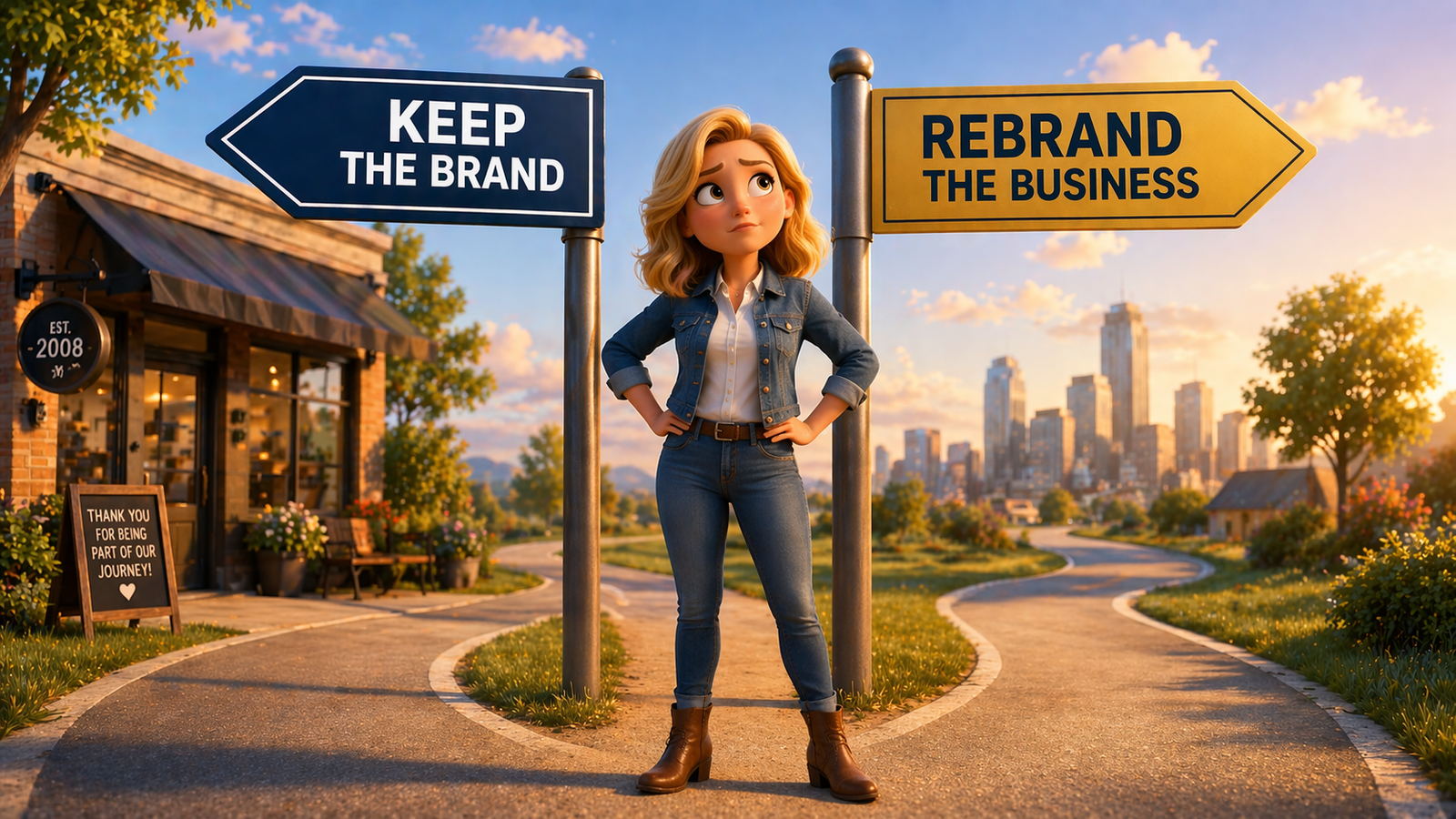
What do you do with the brand?
Keep it? Scrap it? Evolve it? This isn’t just a logo conversation. It’s a strategy conversation — and the wrong call can cost you customers, revenue, and market position before you even find your footing.
Here’s how to think through it like a strategist.
First, Understand What You Actually Bought
When you acquire a business, you’re not just buying the product, the equipment, or the customer list. You’re buying — or inheriting — its brand equity.
Brand equity is the trust, reputation, and emotional positioning the business holds in the minds of its customers. It’s what makes people choose it without shopping around. It’s what generates repeat business before you spend a single dollar on marketing.
And here’s the real question you need to answer before anything else:
➤ Is this brand an asset — or a liability?
That single answer drives everything else.
Option 1: Keep the Brand
When the brand is a genuine asset
This is the right call when:
- The business has a strong local reputation and loyal customer base
- Reviews and word-of-mouth are consistently positive
- The brand has established SEO and a visible online presence
- The name is synonymous with the service — people know exactly what it means
- Revenue is tied heavily to repeat customers who chose the brand, not just the deal
Strategic advantage: You preserve customer lifetime value and avoid a revenue dip during transition.
Watch out for: You also inherit the hidden problems — bad processes, outdated perception, or operational issues that have been quietly eroding trust. Keep your eyes open before you commit.
Option 2: Rebrand
When the brand is holding you back
This is the right call when:
- The reputation is poor or the customer experience has been inconsistent
- The brand looks and sounds outdated — in design, messaging, and positioning
- You’re changing the business model or targeting a completely different audience
- Previous ownership damaged trust with customers, employees, or the community
- The current brand perception limits your pricing power or growth potential
Strategic advantage: You gain the power to reposition strategically and build the brand YOU want from a clean starting point.
Watch out for: You lose the built-in trust and must rebuild awareness from scratch — which takes time, budget, and consistency. Don’t underestimate the cost.
Option 3: The Hybrid Approach
Often the smartest play in the room
Experienced operators use this approach more than people realize — and it works because it doesn’t force you to choose between protecting what’s working and building what’s next.
Here’s how it plays out:
- Keep the existing name initially — communicate “Under New Ownership” clearly and confidently
- Gradually evolve the brand — refresh the logo, modernize the messaging, elevate the experience
- Rebrand fully once trust has transferred from the old brand to the new direction
This approach buys you time, protects existing revenue, and gives you the space to build real relationships with customers before you ask them to follow you somewhere new.
A Simple Brand Equity Scorecard
Before you decide, run the brand through this quick scorecard. Score each factor honestly — strong or weak — then count.
| Factor | Strong → Keep | Weak → Rebrand |
| Reputation | Consistently positive | Poor or inconsistent |
| Customer Loyalty | High repeat rate | One-time or declining |
| Online Presence | Strong SEO & reviews | Weak or negative |
| Brand Fit (Future Vision) | Aligned with your goals | Misaligned or limiting |
| Market Position | Clear and differentiated | Confusing or generic |
If 3 or more factors score weak — seriously consider rebranding.
The Hard Truth Most Buyers Miss
Most buyers think: “I’ll just fix the operations and keep the brand.”
But if the brand is weak, you’re pouring operational excellence into a leaky bucket. You can run the tightest ship in town and still bleed customers because the name carries baggage.
Flip side? Rebranding a strong, beloved brand is like setting fire to goodwill you already paid for.
Either mistake is expensive. The fix is to do your homework first.
The Questions You Must Answer Before Deciding
Run through these before you make the call:
On Customers & Revenue
- Where does revenue actually come from — brand trust or convenience?
- How many customers are repeat buyers vs. one-time?
- If the name changed tomorrow, would customers follow you?
On Reputation & Risk
- What do reviews actually say — look for patterns, not just star averages
- Is there hidden brand damage? Lawsuits, complaints, bad press?
- Do employees speak about the brand with pride — or embarrassment?
On Strategic Alignment
- Does this brand reflect where you want the business to be in 3–5 years?
- Will the current name limit your pricing power or position in the market?
- Does it box you into a niche you don’t want to be in long-term?
- If you were starting from scratch, would you choose this name?
On Transition Reality
- Can you absorb a temporary revenue dip if you rebrand?
- Do you have the marketing budget to rebuild awareness from the ground up?
- Do you have the time and team to execute a rebrand properly?
The Strategic Alignment Rule
Here’s the simplest way to think about this decision from a growth perspective:
- Keep the brand if your strategy is optimization and cash flow
- Rebrand if your strategy is transformation and scaling
- Go hybrid if your strategy is low-risk transition
Brand, market positioning, and growth direction need to be in alignment. When they’re out of sync, you’re swimming upstream — and it shows in your marketing spend, your close rates, and your retention numbers.
The Coaching Question That Changes Everything
“What is your vision for this business in 3 years — and does the current brand help or hinder that vision?”
Answer that honestly, and your brand decision becomes a lot clearer. Not easy — but clear. And in business, clarity is the most underrated competitive advantage there is.
Need help thinking through a brand decision for a business you’re buying or building?
Outlaw Marketing specializes in promotion strategy for entrepreneurs and small business owners who are done playing small.
Now Get Out There and Market Like an Outlaw
Want more bold marketing ideas like this?
Check out Outlaw’s Biz Guide — our no-fluff blog packed with real-talk marketing tips for small-town rebels → outlawmarketing.net/blog
Want Free Sh*t That Actually Helps?
Sign up for my newsletter and get outlaw-only tips, bold AF tricks, exclusive AI prompts, and other badass freebies. No fluff. No gatekeeping.https://theoutlawedge.com
Want more bold marketing tips and free content prompts? Join my free Facebook group, The Outlaw Edge → The Outlaw Edge Group
Leave a Reply
You must be logged in to post a comment.