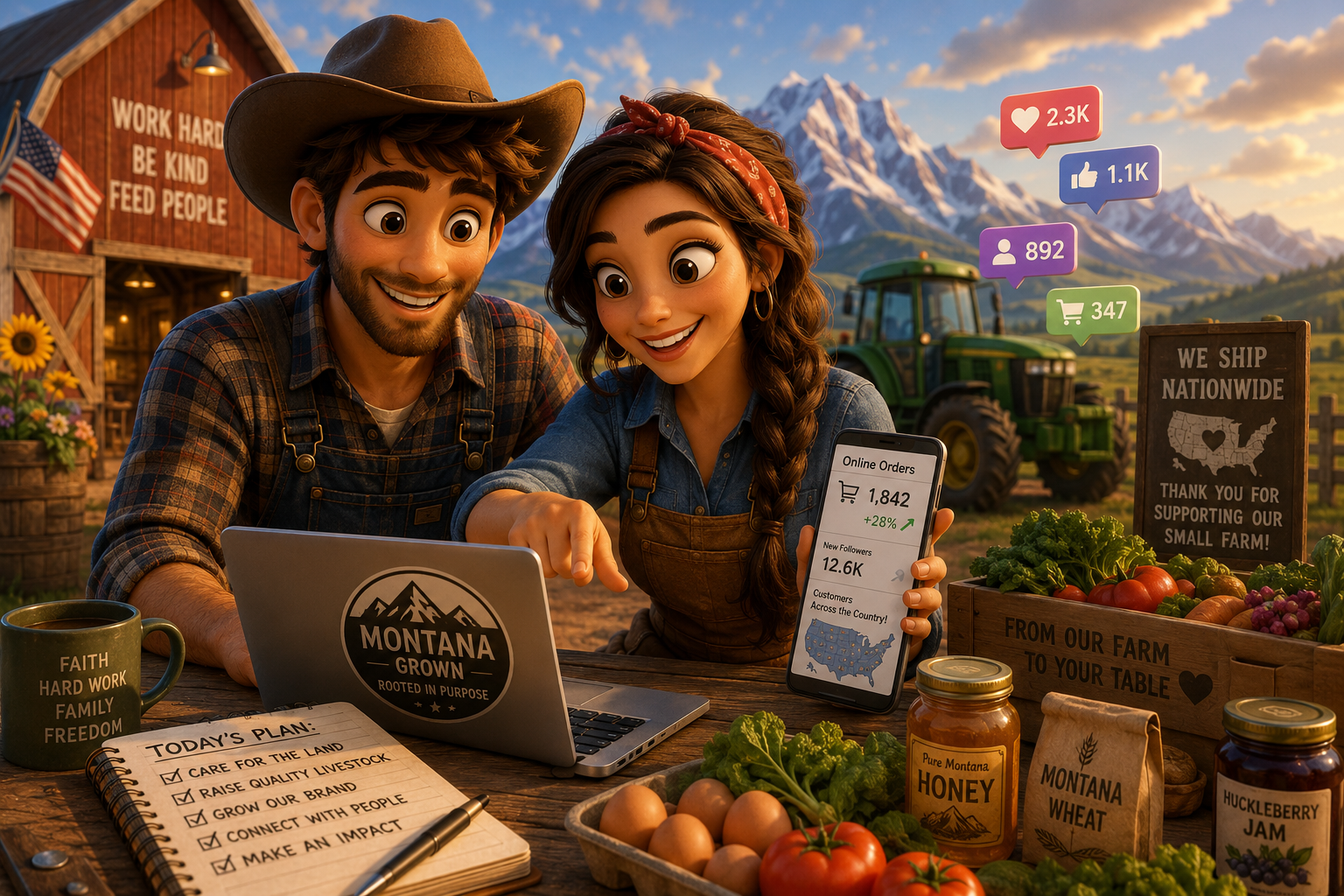
Nobody buys from a stranger. But they’ll drive twenty miles out of their way to buy from someone they trust.
That’s the rural advantage. And most small businesses in farm country, small towns, and tight-knit communities are sitting on a goldmine — and they don’t even know it.
Your story is your marketing strategy. The sunrise over the fields. The third-generation family recipe. The neighbor who taught you everything you know. These aren’t quaint details. They’re the reason people choose you over the big box store, the online retailer, or the slick competitor in the city.
But here’s the problem. Too many rural businesses skip storytelling. They post hours and prices. They run occasional deals. They stay quiet and hope word of mouth does the work.
Word of mouth is powerful. But it has limits. Story-driven marketing takes your reputation and puts it on the internet — where it works for you 24 hours a day, 7 days a week, to every customer you haven’t met yet.
This post breaks down exactly how to use storytelling to build real, lasting connections with your community — online and off. Let’s get into it.
Key Takeaways
- Rural businesses have a storytelling advantage that urban brands can’t buy — authenticity, community roots, and real human connection.
- Customers in rural markets buy based on trust. Story-driven marketing builds that trust faster than any ad.
- You don’t need fancy equipment or a big budget. Your phone and your real-life experiences are enough to start.
- Consistent, genuine stories on social media turn followers into loyal customers — and loyal customers into advocates.
- Outlaw Marketing’s Big Ideas Brainstormer can help you find your story angles when you’re stuck.
Why Storytelling Works Differently in Rural Communities
In rural areas, relationships aren’t a nice-to-have. They’re everything.
Research from Psychology Today confirms what most small-town business owners already know: people make purchasing decisions based on emotion and then justify them with logic. In rural communities, that emotional foundation is almost always built on trust — trust that’s earned through shared values, community ties, and personal reputation.
Big brands can spend millions trying to manufacture that feeling. You already have it.
However, there’s a catch. Customers need to see your story to connect with it. If you’re only visible on a handwritten sign or a flyer at the feed store, your reach has a ceiling. The moment you start telling your story online, that ceiling disappears.
Here’s why story-driven marketing for rural businesses works so well:
- It’s differentiated. Your story is 100% original. No competitor can copy it.
- It triggers emotion. Emotion drives decisions. Logic explains them.
- It builds loyalty fast. People who feel connected to your story stay with you through price changes, competition, and tough seasons.
- It scales your word-of-mouth. A compelling post gets shared. Shares reach people you’ve never met.
The 5 Types of Rural Business Stories That Convert
Not every story works for every business. However, most rural businesses have at least three or four of these angles ready to go right now.
1. The Origin Story
Where did you come from? Why does this business exist? Who built it and why? Your origin story is the foundation of everything. It answers the most important question any customer has: ‘Why should I trust you?’
Example: ‘My grandfather started this farm in 1952 with one tractor and a determination to feed this community. Today, we’re still here. Still farming the same land. Still selling at the same farmers market he helped build.’
That’s not just information. That’s identity. And people buy from people they identify with.
2. The Behind-the-Scenes Story
Show the work. The 4 a.m. starts. The muddy boots. The careful hands selecting the best produce, product, or piece. Behind-the-scenes content builds trust because it shows transparency. Customers know what they’re getting — and who they’re getting it from.
Next time you’re doing something you do every single day without thinking about it, film it. That ordinary moment is extraordinary to someone who’s never seen it.
3. The Community Connection Story
Rural businesses are woven into the fabric of their communities. Celebrate that. Sponsor a Little League team? Show it. Support a local fundraiser? Post about it. Hire locally? Tell people why that matters to you.
Because here’s the truth: your customers want to know their money stays local. Give them that story, and they’ll give you their loyalty.
4. The Customer Story
Your best salespeople are your satisfied customers. With their permission, share their stories. A wedding that used your flowers. A family that’s been buying your beef for fifteen years. A small business that got its start with your services.
Social proof is powerful everywhere. But in rural communities, a familiar face sharing a genuine recommendation is almost impossible to beat.
5. The Seasonal and Local Story
Rural life has rhythms. Harvest season. First frost. Planting time. County fair. These are built-in content opportunities that urban businesses would pay a fortune to manufacture. You get them for free — because you live them.
Tie your marketing to local seasons and events. It keeps your content fresh, timely, and deeply relevant to the people you’re trying to reach.
How to Tell Your Story on Social Media Without It Feeling Forced
A lot of rural business owners feel awkward about posting online. They think: ‘I’m not a influencer. I’m not going to dance on TikTok. That’s just not me.’
Good. Nobody’s asking you to.
Authentic storytelling doesn’t require performance. It requires honesty. Here’s a simple framework to get started:
The 3-Part Story Formula
- Situation: What’s happening right now? What’s the context?
- Stakes: Why does it matter? What’s at risk or at play?
- Resolution or Invitation: What happened, or what do you want the audience to do next?
That’s it. Three parts. A few sentences. A real photo or short video. That’s a post. That’s content. That’s storytelling.
Example: ‘We’ve been curing this ham the same way for 40 years. (Situation) This year’s batch is the best we’ve ever made — and we only have 30 left. (Stakes) Come in this week before they’re gone. (Invitation)’
Short. Real. Effective.
The Platforms That Work Best for Rural Business Storytelling
- Facebook: Still the king for community connection in rural areas. Great for longer stories, event promotion, and customer engagement.
- Instagram: Visual storytelling powerhouse. Perfect for farm-to-table content, behind-the-scenes shots, and seasonal moments.
- YouTube Shorts / TikTok: Short video is the fastest-growing content format. A 60-second tour of your operation can reach thousands of people who’ve never heard of you.
- Google Business Profile: Often overlooked. Your story lives here through posts, photos, and customer reviews. Make sure it’s updated and active.
You don’t have to be everywhere. Pick one or two platforms where your customers actually spend time. Then show up there consistently.
Common Storytelling Mistakes Rural Businesses Make
Even with the best intentions, these mistakes can undermine your storytelling strategy. Avoid them.
Mistake 1: Waiting for Something ‘Interesting’ to Happen
The most compelling stories are often the most ordinary ones. Don’t wait for a big event. Your daily routine is interesting to someone who doesn’t live it.
Mistake 2: Making It Too Polished
Authenticity beats production value every time in local marketing. A slightly shaky phone video of you talking about your product will outperform a slick, scripted ad. People can feel the difference between genuine and manufactured.
Mistake 3: Talking at People Instead of With Them
Storytelling is a two-way street. Ask questions. Invite comments. Respond to every reply. Because the businesses that build the strongest communities online aren’t the ones who broadcast the loudest — they’re the ones who listen the best.
Mistake 4: Posting Inconsistently
One great post won’t build a following. Consistency matters more than perfection. Commit to a realistic schedule and stick to it. Even twice a week beats once a month every single time.
Mistake 5: Skipping the Call to Action
A good story without a next step is a missed opportunity. Every post should have a purpose: visit the farm stand, call to order, stop by this weekend, share with a friend. Don’t assume people know what you want them to do. Tell them.
How to Find Your Story When You’re Stuck
Sometimes the hardest part is knowing where to start. If you’re staring at a blank post and your mind goes blank, try these prompts:
- What’s something that happened this week that surprised you?
- What’s a question a customer asked you recently?
- What does a day in your business look like from start to finish?
- What’s something about your product or service that most people don’t know?
- Who taught you something important about this business?
- What would you want your grandkids to know about what you built?
These prompts are a starting point. However, if you want to go deeper — if you want to find the real story angles that will connect, convert, and drive customers through your door — there’s a smarter way.
Outlaw Marketing’s Big Ideas Brainstormer is built for exactly this. It’s an AI-powered brainstorming tool inside the Outlaw AI Toolkit that helps small businesses generate content ideas, story angles, and marketing campaigns in minutes. No creative block. No blank page. Just real ideas that fit your business and your voice.
Ready to Tell Your Story?
You’ve built something real. Something worth talking about. The farm, the shop, the service, the craft — it all has a story behind it. And that story is your most powerful marketing asset.
Stop hiding it. Start sharing it.
Visit outlawmarketing.net to explore the Outlaw AI Toolkit and put the Big Ideas Brainstormer to work for your business today. Because the customers who need you most are out there right now — looking for someone they can trust.
Give them a reason. Tell your story.
Frequently Asked Questions
Q: Why is storytelling important for rural businesses?
Storytelling builds trust — the single most valuable currency in rural communities. Customers in small towns and farming communities buy based on relationships. Sharing your story creates a relationship with people who haven’t met you yet. It turns strangers into customers and customers into loyal advocates.
Q: What kind of stories should a small rural business tell?
Start with your origin story, behind-the-scenes content, customer success stories, and seasonal or community-tied content. These categories resonate strongly with rural audiences because they reflect real life, local values, and genuine human connection.
Q: How often should a rural business post on social media?
Consistency beats frequency. Two to three times per week is an excellent starting point for most small businesses. The most important thing is to show up regularly. An irregular posting schedule makes it hard for followers to stay engaged.
Q: What’s the best social media platform for rural businesses?
Facebook remains the top platform for rural community engagement. Instagram is excellent for visual storytelling — especially for agriculture, food, and craft businesses. Google Business Profile is often overlooked but critical for local search visibility. Start where your customers already are.
Q: How do I make my storytelling feel authentic and not salesy?
Lead with value and emotion first. Focus on sharing real moments, real people, and real experiences before you make an ask. When you do include a call to action, make it natural and relevant to the story you just told. People don’t mind being invited to buy — they just don’t want to feel manipulated.
Q: What tools can help me generate content ideas for my rural business?
Outlaw Marketing’s Big Ideas Brainstormer is a powerful AI-powered tool designed specifically for small businesses. It helps you generate story angles, content ideas, and campaign concepts quickly — without staring at a blank screen. Try it at outlawmarketing.net.
Sources & Further Reading
- Psychology Today: The Psychology Behind Why We Buy
- Harvard Business Review: The Irresistible Power of Storytelling in Marketing
- Social Media Examiner: How to Use Storytelling in Social Media Marketing
- Eventbrite: How Small Businesses Can Leverage Community Events
- MarketingProfs: Story-Driven Content That Converts
- Outlaw Marketing — Big Ideas Brainstormer
Leave a Reply
You must be logged in to post a comment.